Why Two Hawaii Weddings With the Same Guest Count Can Have Very Different Budgets
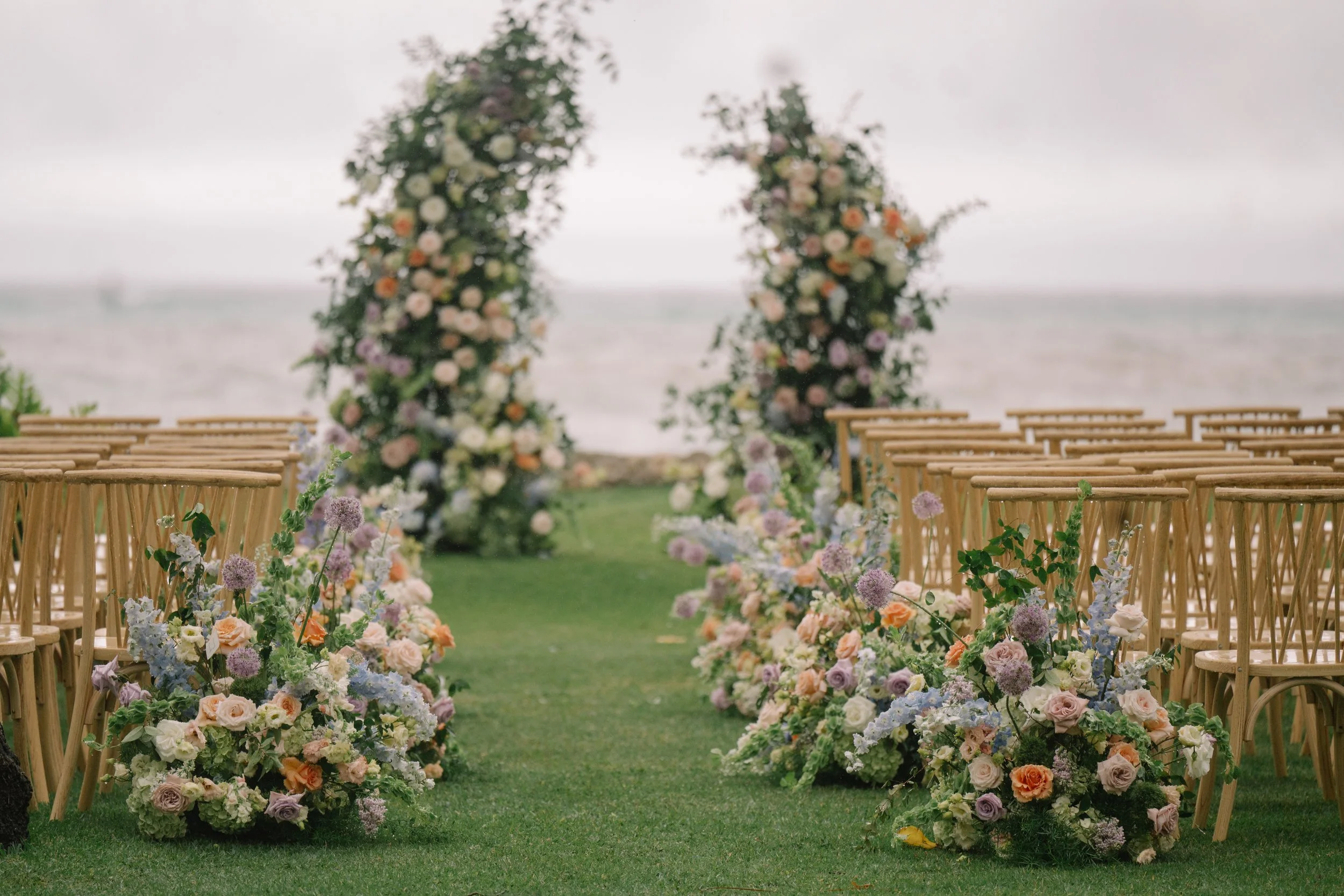
Photography by June Cochran
One of the most common questions couples ask when they start planning a destination wedding in Hawaii is, "How much should a wedding for 100 guests cost?"
And honestly, we completely understand why people ask. When you're trying to make a thoughtful financial decision, you want a real answer. You want to know what's realistic, what's normal, and what kind of investment actually makes sense for the wedding you're envisioning.
The tricky part is that guest count is only one piece of the budget puzzle. We've planned weddings with similar guest counts, similar venues, and similar planning timelines that ended up with very different overall budgets. Not because one couple was doing anything wrong, but because they cared about different things.
That's where a Hawaii wedding budget gets more nuanced than a simple per-person estimate. A 100-guest wedding focused heavily on guest experience will look very different from a 100-guest wedding focused heavily on custom design. Most of our couples care about both, which means the real work is finding the right balance.
Guest Count Matters, But It's Not the Whole Story
Guest count absolutely affects your wedding budget. As your guest list grows, you're not just adding more meals. You're also adding more chairs, more place settings, more linens, more glassware, more invitations, more transportation needs, more welcome bags, and more room in the floor plan.
It can also affect your design budget. More guests usually means more tables, which often means more centerpieces, more candles, more printed menus, more chargers, more specialty napkins, and more tabletop details. Even if your overall design concept stays the same, the quantity of what you need can change pretty quickly.
Let me paint a picture of what this looks like. If you're deciding between inviting 80 guests and 120 guests, it's easy to think about the extra food and bar cost first. But those additional 40 guests may also require several more reception tables, additional rental items, more floral arrangements, a larger seating chart, more shuttles, and sometimes even a more complicated layout. That's why guest count can have such a big ripple effect, even before you start talking about upgrades or custom details.
At the same time, guest count is not the only reason two weddings with the same number of people can land in completely different budget ranges. Once the basics are covered, your priorities become one of the biggest factors.
When Guest Experience Is the Priority
Photography by June Cochran
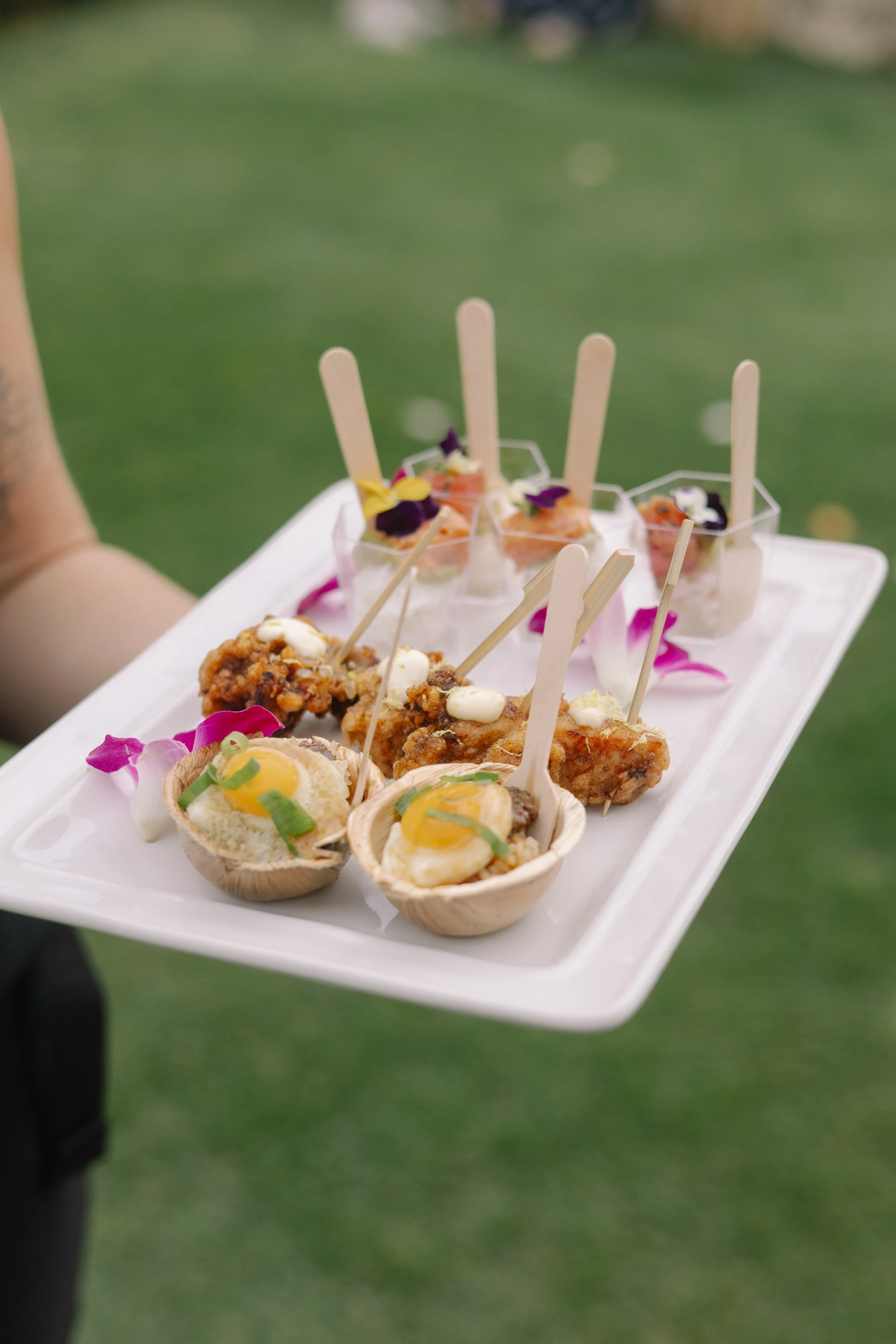
Some couples are primarily focused on how their wedding feels for the people attending. When they picture the day, they imagine their guests arriving with ease, enjoying an incredible meal, ordering their favorite drink from the bar, dancing all night, and feeling genuinely cared for throughout the weekend.
For these couples, the budget often leans toward hospitality and entertainment. That might include an elevated food experience, a full bar or specialty cocktails, live music, a great DJ, guest transportation, a welcome party, a farewell brunch, or activities that help guests experience Hawaii in a thoughtful way.
This doesn't mean design doesn't matter. It absolutely does. But when decisions need to be made, these couples are usually asking, "How will this impact our guests' experience?" They may choose a simpler floral direction if it means they can host an additional event, upgrade the bar, or make transportation easier for everyone.
We've worked with couples who cared deeply about creating a full weekend experience. For them, the welcome party wasn't just an extra event. It was a chance for guests traveling from different parts of their lives to connect before the wedding day. In that case, spending more on hospitality made sense because it supported the feeling they wanted their guests to have.
When Design Is the Priority
Other couples are deeply drawn to the visual experience of the wedding. They want the day to feel personal, cohesive, and reflective of their story. When they imagine the wedding, they're thinking about the ceremony backdrop, the reception space, the florals, the rentals, the lighting, the stationery, and the way all of those pieces work together.
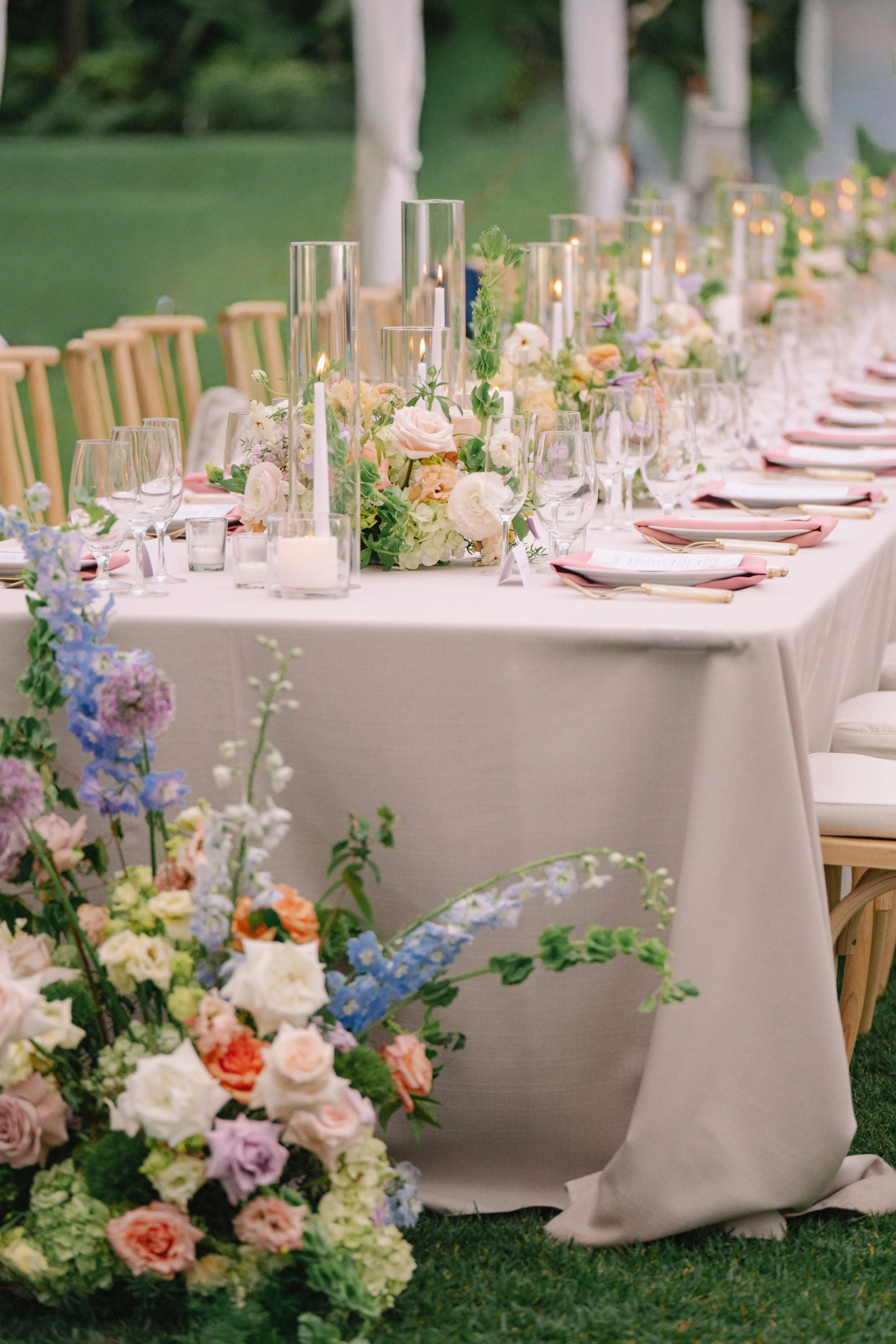
For these couples, the budget often leans toward custom floral installations, unique rental pieces, layered tablescapes, specialty linens, architectural lighting, custom stationery, lounge vignettes, and design details that make the celebration feel like them.
This is also where budgets can increase more quickly than couples expect. A highly customized design usually requires multiple big-ticket vendors working together. Your florist, rental company, lighting team, stationery designer, planner, and sometimes a fabrication team are all contributing to the final result. When the vision is specific, layered, and personal, there are often fewer simple ways to scale it down while keeping the same overall impact.
For example, a couple might fall in love with the idea of a dramatic ceremony installation, custom escort display, specialty linens, statement lighting, and a reception full of layered tabletop details. None of those choices are unreasonable on their own. But together, they create a design-heavy wedding that requires more labor, more product, more rentals, more setup time, and more vendor coordination.
That's why design-focused weddings often need a more flexible budget. It's not just about making things pretty. It's about building an entire visual environment with intention.
Most Couples Want Both
In our experience, most couples aren't choosing between guest experience and design. They care deeply about both. They want their guests to have an incredible time, and they also want the wedding to feel beautiful, personal, and thoughtfully designed.
That's where budgeting can start to feel tricky. These priorities don't always replace each other. They often stack.
You might want a full bar, live entertainment, guest transportation, a welcome event, custom florals, specialty rentals, layered tablescapes, and beautiful lighting. All of those things can contribute to an incredible wedding, but they also pull from the same overall budget.
This is usually where the conversation shifts from "What does a wedding cost?" to "What matters most to you?" Because once we understand what you value most, we can help you make decisions that feel intentional instead of reactive.
Finding the Right Balance
Finding the right balance doesn't mean cutting everything fun or beautiful. It means understanding where your money will create the most impact for your specific wedding.
Photography by June Cochran
One couple may decide they would rather have a live band and a full bar, then simplify their floral design. Another couple may choose a more customized reception design and keep additional weekend events more low-key. Some couples reduce their guest count slightly so they can elevate both the guest experience and the design without stretching the budget in every direction.
What we often find during the planning process is that not every idea carries the same weight.
A couple might initially fall in love with a dramatic floral installation because it looks beautiful in photos. As we dig deeper into their priorities, they may realize what they actually care about is creating an intimate atmosphere where their guests feel connected. There may be several ways to achieve that feeling, and some of them have a much bigger impact than others.
The opposite can happen too. Sometimes a couple mentions a detail that seems small at first, but turns out to be deeply meaningful. Maybe it's incorporating family heirlooms into the design, serving a favorite dish from their relationship, creating space for a cultural tradition, or investing in live music because music has always been a huge part of their story. Those are often the investments that feel worthwhile because they're connected to something personal.
This is one of the reasons we spend so much time getting to know our clients before making recommendations. The goal isn't to recreate a Pinterest board or check off a list of wedding trends. The goal is to understand what matters most to you and help you invest in the pieces that will make your wedding feel meaningful, memorable, and unmistakably yours.
When you approach budgeting through that lens, decisions become much easier. Instead of asking, "Should we spend money on this?" the question becomes, "Does this support the experience we want to create?" That's often where clarity starts to emerge.
This is also why two weddings with the same guest count can end up looking very different. One couple may choose to invest in a welcome party because spending extra time with loved ones feels important. Another may prioritize a highly customized reception design because creating a visually immersive experience is what excites them most. Neither choice is better. The key is making those decisions intentionally rather than simply following what everyone else is doing.
Start With Priorities, Not Just a Spreadsheet
One of the biggest mistakes we see couples make is trying to build a wedding budget before they've really identified their priorities. They start with a number they found online, then begin saving inspiration photos, researching venues, imagining guest experiences, and adding all the details that would make the wedding feel meaningful.
Eventually, they realize the wedding they're envisioning doesn't quite match the budget they started with. That doesn't mean they've failed or that their expectations are unreasonable. It usually means they haven't yet connected their priorities to the cost of creating them.
A helpful wedding budget is not just a spreadsheet. It's a decision-making tool. It should help you understand what matters most, where your money is going, and how each choice supports the wedding you actually want to have.
So before you ask, "How much should a 100-guest wedding cost?" it may be more helpful to ask, "What kind of experience are we trying to create?"
Do you want the weekend to feel incredibly generous and guest-focused? Do you want the design to feel highly customized and visually memorable? Do you want a thoughtful balance of both? Once you know the answer, the budget conversation becomes much clearer.
Curious what this could look like for your destination wedding in Hawaii? We'd love to hear your vision and help you build a plan that feels thoughtful, intentional, and genuinely aligned with what matters most to you. Let's chat about your dream wedding.
We’d love to help bring your Hawaii wedding vision to life. Let’s chat about your dream wedding.
If you enjoyed this blog post, you might also enjoy our guide on how to design a wedding that truly feels like you.