
Photography by Megan Moura
At some point in the wedding planning process, you start to realize how much of your day depends on people you’ve never actually watched work.
You’ve seen your photographer’s portfolio, your florist’s Instagram, and your DJ’s reviews. But you haven’t seen them in motion on a real wedding day, making real decisions under real pressure.
A few weeks ago, one of our couples asked a vendor something during a consultation that we haven’t stopped thinking about. It wasn’t about pricing, the package, or the add-ons. They asked:
“What can we do to help you do your best work on our wedding day?”
Most couples never think to ask that. Most wedding vendors don’t expect to be asked. But it points to something worth sitting with.
Your vendors aren’t just delivering a service. They’re performing, creating, and problem-solving in real time, on one day, with no do-overs. How well they’re able to do that depends on more than their own skill. It also depends on the conditions surrounding them.
What Most Couples Assume About Their Wedding Vendors
It’s easy to think of vendors as a checklist. Book the photographer, book the florist, book the DJ, and you’re done. You picture them showing up and everything simply working because that’s what you’re paying for.
But your photographer needs good light and enough room to move. Your florist needs a cool, shaded place to keep arrangements fresh until the last possible moment, plus enough time before the ceremony to complete the final touches most guests will never notice. Your DJ needs power in the right place and a clear sightline to the dance floor.
None of this is about your vendors being high-maintenance. It’s about giving talented people the conditions they need to do their best work for you.

Photography by Megan Moura
Why the Right Conditions Matter on Your Wedding Day
Here’s the part that surprises people: A stressed vendor doesn’t just have a harder day. It can show up in the work.
A florist rushing through setup because the timeline didn’t include enough time might have to skip the final checks that make an arrangement look finished rather than hurried. On the other hand, a timeline that allows too much time may leave floral arrangements sitting in the Hawaii sun longer than they should.
A photographer working in harsh afternoon light because no one considered the position of the sun might struggle to create the images you were hoping for. A DJ who is still troubleshooting an inadequate power setup twenty minutes into cocktail hour is thinking about outlets instead of reading the room.
It isn’t about whether your wedding vendors are talented enough. It’s about whether they’ve been given what they need to use that talent well.
What Your Hawaii Wedding Planner Is Already Asking
Behind the scenes, we’re asking that same question on your behalf long before you’d ever think to bring it up yourself. In fact, our Hawaii wedding planning process is designed with this question in mind.
Because almost every wedding we plan is fully outdoors, that looks a little different than it might elsewhere. There often isn’t a back room or cold storage area to fall back on.
It means developing a timeline with your florist that accounts for shade and keeps arrangements out of direct sunlight as much as possible. It means building your photographer’s timeline around golden hour from the beginning, so you can naturally step away for sunset photos rather than squeezing couple portraits into whatever opening happens to be available.
It means discussing power requirements with your DJ in advance. If they haven’t worked at the venue before, we’ll connect them directly with the venue manager so the technical details are confirmed well before the wedding day, not discovered that morning.
It also means leaving enough room in the morning timeline that your hair and makeup team isn’t racing against a schedule no one accounted for.
None of these are dramatic decisions. They’re small and practical. But they can make the difference between a vendor working with confidence and a vendor trying to catch up all day.
The Same Question Applies to Your Wedding Planner
Once we started thinking about that couple’s question, we couldn’t help but turn it back on ourselves.
We ask vendors what they need to do their best work for you. But the same is true for us as your wedding planner. What can you do to help us be at our best on your wedding day?
It isn’t about being an “easy” client. It’s about understanding what genuinely helps your planning team support you well.
Give Us All the Details
At some point in the planning process, you’ll probably be handed a spreadsheet of song selections or asked for the names of everyone participating in your processional. It may feel like busywork or like information someone else must already have.
It isn’t, and they usually don’t.
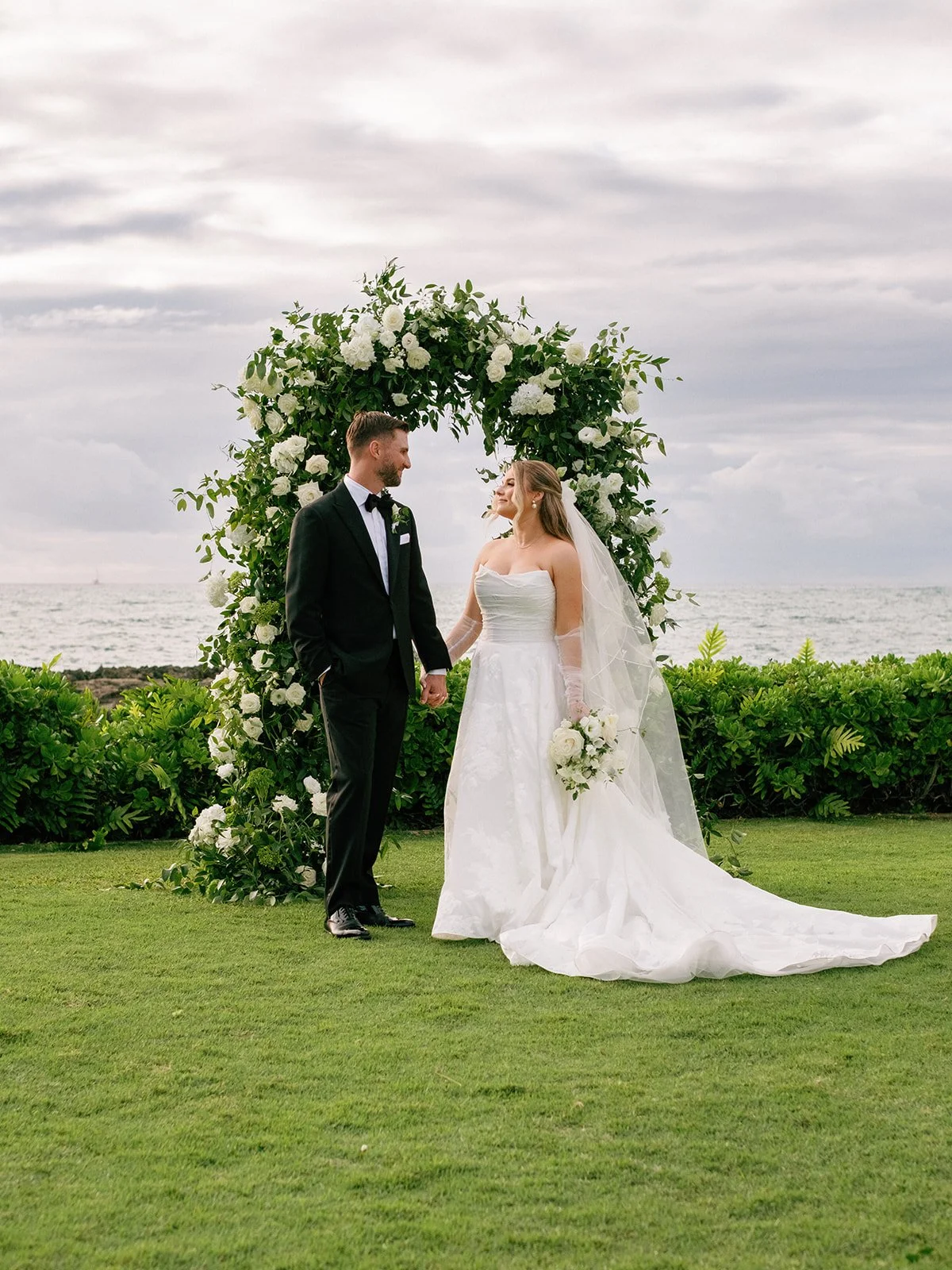
Photography by Megan Moura
We aren’t asking for those details simply because a form requires them. We’re asking because they allow us and your other vendors to do the jobs you hired us for. They also give us the opportunity to catch mistakes beforehand rather than trying to compensate for missing information in the moment.
Wedding party names & processional order are a good example.
Imagine a coordinator who has never met anyone in your wedding party arriving at the rehearsal without a list of names. Organizing the processional immediately falls back on you, at precisely the time when you hired us to take that responsibility off your plate.
Now imagine that same coordinator receiving the names in advance. At the rehearsal, they can quietly connect each face to a name as the wedding party lines up and carry that knowledge into the wedding day.
They know who your maid or person of honor is, so they can find them discreetly before the speech rather than scanning the room and hoping to guess correctly. They recognize your sister, so they know who can help gather relatives for family photos. They know the designated point of contact, so they understand exactly who to check in with throughout the morning.
None of that comes from asking around on the wedding day. It comes from a list of names that took a few minutes to complete weeks earlier.
Skipping one questionnaire or leaving a few boxes blank probably won’t cause the entire day to fall apart. But providing the information we request is one of the easiest ways to help everyone working on your wedding do their best work for you.
Be Honest About Your Priorities and Budget
Honesty matters just as much, especially when it comes to your wedding budget.
We’re not here to judge your budget, your taste, or the inspiration photos you love or hate. That was never our role. When you tell us clearly what you want, what you don’t want, and what you’re genuinely comfortable spending, it allows us to advocate for you properly from the beginning.
Picture a couple with a grand vision who tells us early in the planning process that they’re only comfortable spending a certain amount. We take that vision and rethink the logistics so it can fit within that number, creating an interpretation that still feels true to what they wanted but is constructed differently.
Later, the couple lets us know they’re actually willing to invest more to bring the original vision to life as it was first imagined.
At that point, we’re not simply adjusting a few details. We’re rebuilding the logistics and revisiting decisions that were made around the original number. That creates more steps, requires more time, and introduces more opportunities for something to be overlooked along the way, only to arrive somewhere we could have started from in the first place.
This doesn’t mean your wedding budget must be locked in from day one. Plans evolve, priorities shift, and that’s completely normal. It simply means that the more honest we can be with each other throughout the process, the more effectively we can help you achieve the results you want.
Keep Us in the Loop When Something Changes

Photography by Megan Moura
The same principle applies when plans, opinions, or priorities change.
You’re allowed to change your mind. You may discover that something you initially thought was essential no longer matters to you, or that you’re willing to invest more in an element you didn’t prioritize at the beginning.
What helps us most is knowing about those changes when they happen.
When we’re working from outdated information, we may continue researching vendors, refining a design, or solving a logistical problem based on a direction you’re no longer excited about. When you keep us in the loop, we can adjust the plan with you rather than discovering later that we’ve been working toward two different versions of the wedding.
None of this is about handing over control. You’re still making every decision that matters. It’s about allowing us to handle the parts you hired us for, so we can spend our energy refining the details rather than untangling a plan that changed without us knowing.
What This Means for Your Hawaii Wedding
You don’t have to become an expert in lighting angles, electrical requirements, or floral logistics to have a wedding that runs beautifully. That was never the point.
The point is that someone is already thinking about those things, so you don’t have to.
You’ll feel the difference without necessarily knowing why. Your photos feel relaxed because the timeline allowed space for them. Your flowers still look full when the ceremony begins because they weren’t installed too early. The music flows naturally because your DJ arrived knowing exactly what the venue could support.
None of that happens by accident. It happens because someone made sure your vendors could bring their best work to your wedding day.
That question our couple asked wasn’t small. It was one of the most thoughtful things they could have done for their own wedding, even if it didn’t feel significant in the moment.
It’s exactly the kind of thinking we build into every destination wedding we plan in Hawaii, so the right conditions are already part of the plan and never something you have to remember to ask about yourself.
You don’t have to manage every person and moving piece alone. We’ve got you.
If this post got you excited about your own Hawaii wedding, you’ll love What the Planning Journey Really Feels Like When You’re Creating a Hawaii Destination Wedding.

