Photography by Mersadi Olson
When you start planning your wedding, it’s usually the
aesthetic that pulls you in first. The colors, the setting, the way you want your day to feel. You might have a Pinterest board, saved photos, or just a general sense of what feels like you.
That’s the fun side of planning, it’s exciting and creative. But as things start to come together, you realize something else is happening at the same time.
Every design decision also has a logistical side to it.
When those two things aren’t aligned is when things can start to feel off. Not necessarily in a big, obvious way, but in the way the day flows. The way the space feels. The way your guests move through the experience. And just as importantly, the way your vendors are able to show up and do what you hired them to do.
This is especially true for outdoor destination weddings in Hawaii, where we are creating custom-built spaces that require a lot of intentional planning behind the scenes, and planning for the unexpected.
Why Aesthetic Alone Isn’t Enough
It’s very easy to design a wedding that looks beautiful in photos, but what’s harder is creating a wedding that feels just as good in real life. You and your guests won’t be experiencing your wedding as a series of images, you’re moving through it in real time. You’re walking through the ceremony space, transitioning into cocktail hour, finding your seats at dinner, navigating the layout, and spending hours in the environment you’ve created. That’s where logistics come in.
For example, ceremony design. With outdoor weddings, especially in Hawaii, there’s a good chance your ceremony will be warm. That’s not something we’re trying to avoid, it’s something we plan for. So instead of asking how to change the setting, we’re asking how to support your guests within it.
Do we have cold water available as guests arrive? Who is setting that up, and when does it get placed so it’s actually ready when people need it? How many cups do we need, and where are guests naturally going to put them when they’re done? Is there a place for that, or are people holding onto cups longer than they should or leaving them behind?
And then after the ceremony, what happens next? Is that water staying in place, or is it being moved to cocktail hour? Who is responsible for that, and where does it go so it continues to feel accessible and intentional?
None of that changes how the ceremony looks in photos, but it completely changes how it feels to be there.
And then when you move into the reception, the same kind of thinking applies in a different way.
You might love a certain layout for your tables and dance floor, but where is your DJ set up so that the sound actually reaches your guests throughout the entire evening? Can guests hear speeches clearly from their seats? Does the music carry naturally from dinner into dancing, or does the energy drop off depending on where people are standing?
At the same time, we’re thinking through how the night flows.
When are guests sitting, and when are they being invited to move? How do we guide people toward the dance floor for moments like your first dance or cake cutting so they don’t miss it? Does the timing feel natural, or are we asking people to shift too quickly or without enough direction?
These are the kinds of things that don’t always show up in inspiration photos, but they have a huge impact on how your wedding actually functions.
Photography by Mersadi Olson
How Logistics Directly Impact Your Vendors
This is the piece that a lot of couples don’t realize at first. Your vendors can only perform at their best when the logistics support them.
For example, your DJ. If the power setup isn’t fully thought through, they may not be able to run their full lighting setup, or their sound system might not perform the way it should. And that directly affects the energy of your dance floor, even if everything looks beautiful.
Or your catering team. If they’re spending time setting up elements that weren’t clearly assigned or planned for, that’s time and focus taken away from service. Instead of making sure everyone’s water glass stays full and empty plates get cleared away, they’re trying to catch up or fill in gaps behind the scenes.
The same goes for your rental team, your florist, your photographer. When timelines are tight or layouts aren’t fully thought through, they’re adjusting in real time instead of operating at their best. None of this comes from a lack of care. It usually comes from small logistical gaps that add up over the course of the day.
And It’s Not Just Your Vendors
When logistics aren’t fully handled, it doesn’t just affect the vendors. It starts to impact the people closest to you.
Your maid of honor might step away to help solve a problem. Your mom might feel like she needs to track something down or coordinate a detail. Someone ends up answering questions, redirecting vendors, or trying to keep things moving.
And those are the exact people you want fully present with you, not managing behind-the-scenes logistics or problem-solving in real time. Just there, experiencing the day with you. This is a big part of what thoughtful planning protects. Not just the flow of the event, but the experience of the people in it.
What It Looks Like When They Do Work Together
When aesthetic and logistics are aligned, everything starts to feel different.
Your ceremony is not only beautiful, but comfortable and intentional in how it’s positioned. Your reception design supports the energy of the evening, making it easy for guests to move, connect, and enjoy themselves without friction. Your vendors are set up with everything they need to perform at a high level, without scrambling or adjusting in the moment. Your timeline flows naturally because it was built around how the day actually unfolds, not just how it looks.
And as a couple, you feel it too. You’re not worrying about whether things are running on time or if something feels off. You’re not watching your loved ones step in to help manage things.
You’re just in it.
Why This Is Such A Big Part Of What We Do
This balance between aesthetic and logistics is one of the biggest ways we support our couples. Because in reality, most planners tend to lean more heavily in one direction.
Some are very structured and organized, but don’t always go deep on design. Others are very design-focused, but don’t always build that vision in a way that fully supports the logistics of the day. What we focus on is bringing both together from the beginning.
So when we’re designing your ceremony, we’re also thinking about making sure the chairs are perfectly straight, guests can easily find their seats, and your photographer has the ability to move freely to capture everything.
When we’re building your reception layout, we’re considering vendor needs, power, timing, and how the space will transition throughout the evening. At the same time, we’re thinking through something else that doesn’t get talked about as often, but matters just as much. We are asking the questions no one else even thinks of.
Who is actually doing each part of this? Who is double checking that the ceremony chairs are straight? Who is making sure there are enough chairs in the front row for your family?
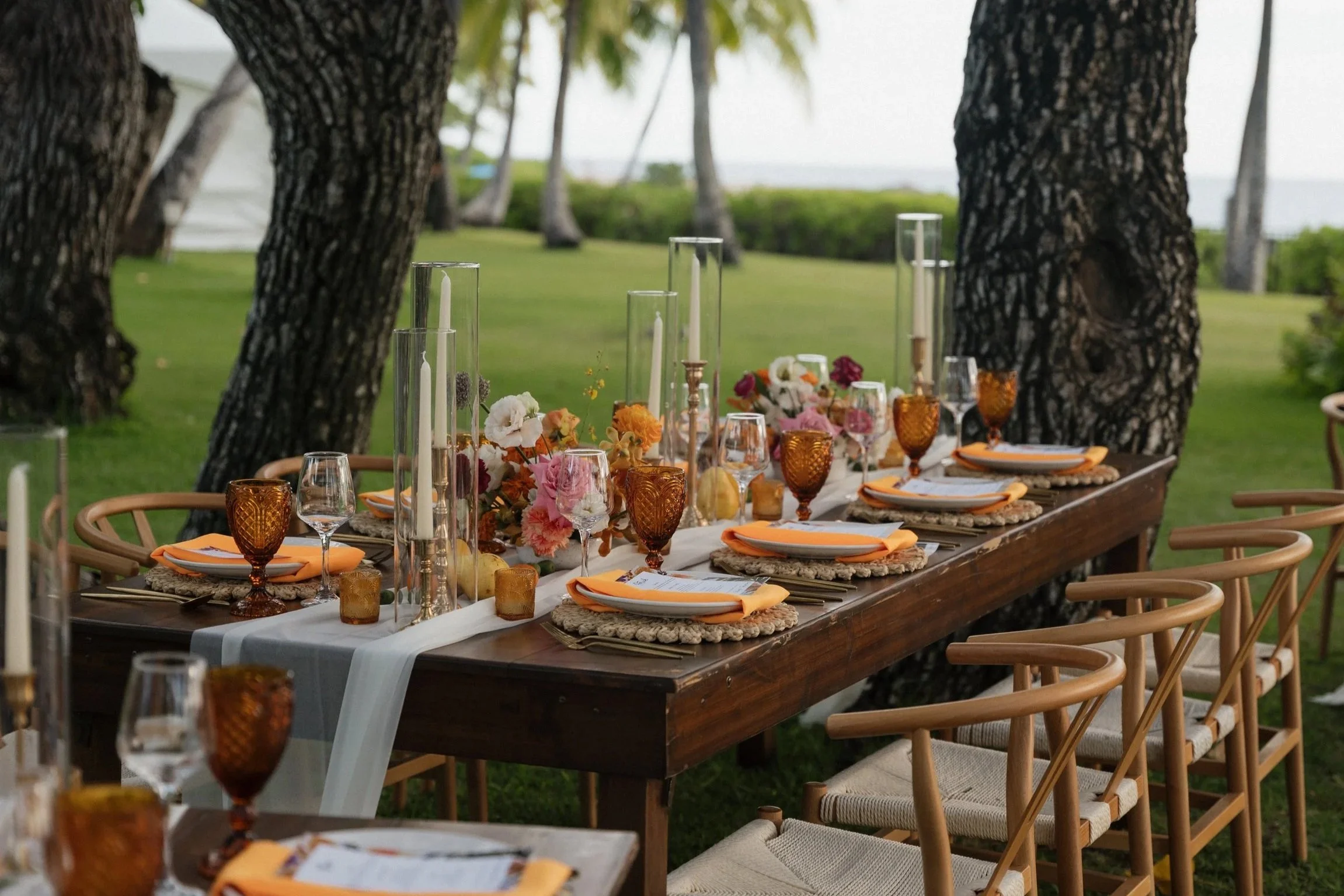
Who is setting the glassware and placing the plates? Who is putting out menus and name cards, and double-checking that everything aligns with the seating chart?
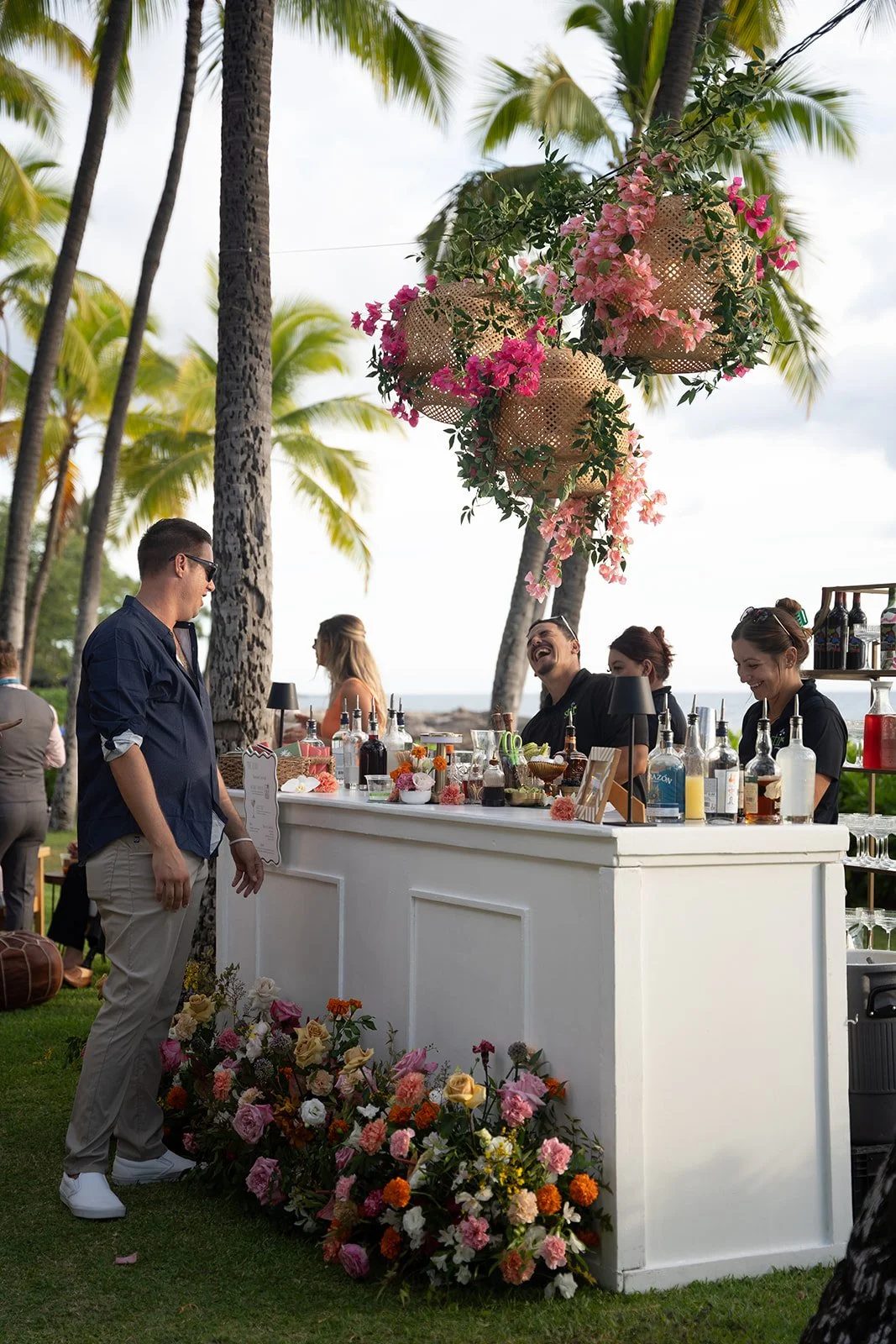
Who is responsible for moving the beverage station from the ceremony to cocktail hour so guests can continue to access it? Who is turning on the lighting at the right time, and adjusting it when the energy of the night shifts?
All of those details are part of the design, but they’re the parts that happen in motion instead of what gets captured in photos.
We think through how each of those pieces will happen ahead of time, who is responsible for them, and how to clearly communicate that to our team and your vendors so everyone can show up prepared and focused on their role. When that’s done well, your vendors aren’t stretched thin or trying to fill in gaps. They’re able to do what they do best.
On your end, your experience doesn’t feel like a series of moving parts, it just feels like it’s unfolding the way it’s supposed to.
The Goal Isn’t Just a Beautiful Wedding
If you’re early in the planning process, it’s completely normal to focus on the aesthetic first, that’s usually what draws you in. But as you move forward, what matters just as much is how everything comes together behind the scenes.
Because the goal isn’t just a beautiful wedding, it’s a wedding that feels good. For you, your guests, and the people you’ve brought in to create it. One where everything flows, everything makes sense, and everyone gets to do what they’re there to do. Including you.
If you’ve been trying to figure out how to bring your ideas to life in a way that actually works, that’s exactly where we come in. We help you take what you’re envisioning and turn it into something that’s not only beautiful, but seamless from start to finish.
Curious what this could look like for you? Let’s chat.
If you found this helpful, read our blog post about how to design a destination wedding in Hawai’i that actually feels like you.